Three modules.
Four ways to
combine them.
Portfolio, profile, and application. Every service is one to one — there are no group sessions and no shared cohorts. What changes between packages is how many schools you are applying to and how much of the record I am building rather than editing.
The pieces you will make

Individual projects built one to one, from research through iteration to a resolved outcome and proper documentation. This is the spine of every package.
Individual project
A self-directed body of work, taken to a finished, documented state. Counted per project, not per session.
AI project workshop
A real commercial pipeline — film, production, interactive — taught from the work I do in New York, not from tutorials. Treated as a tool inside a practice, never a shortcut around one. Swappable for another project if it is not right for your direction; the swap carries a fee difference.
Object No.327-13 is a book generated entirely by AI, fictionalising a research report on an alien object in order to satirise anthropocentrism. It was made by a student who went on to an offer from the RCA. The AI is the argument in that project, not the shortcut — which is the distinction a committee is actually testing for, and the distinction this module is built around.
See the projectEverything before the application
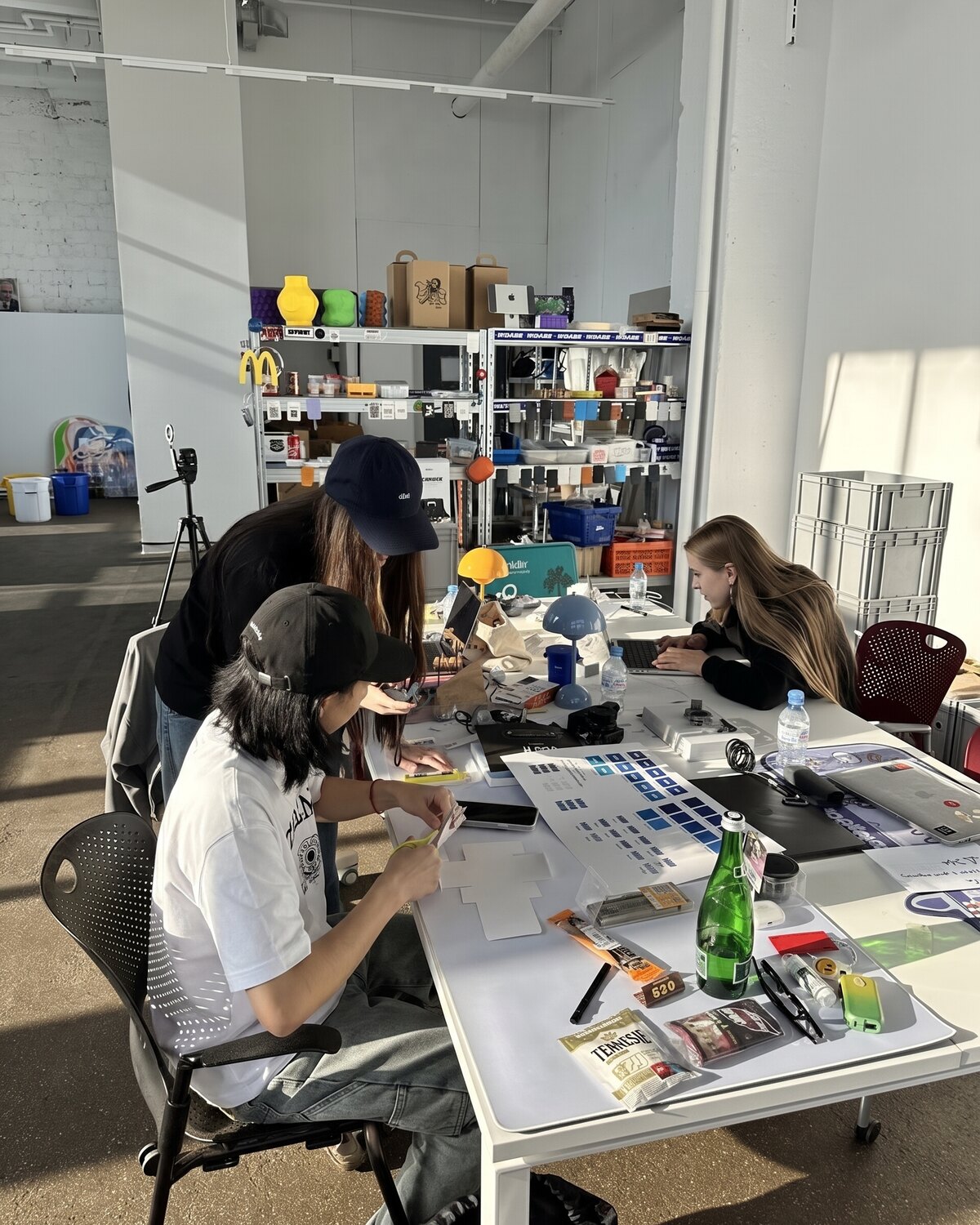
For candidates whose record needs building, not just editing. Runs in parallel with the portfolio rather than after it. The whole module can also be taken as one bundle — consultation, studio placement and certificate, two competition entries, and a recommendation letter — priced below the sum of its parts.
Profile strategy consultation
One to one, plus a written roadmap. What to build, in what order, against the deadline you are actually working to.
US studio placement + certificate
Project training inside a working US studio, with documentation on completion.
Competition submission coaching
Selecting the right open calls and preparing the submission. Two entries at Premium.
Summer school & pre-college applications
Choosing which summer programme is worth the money, and handling the application for it. Booked on its own, most often a year before the degree application.
Submission and everything around it
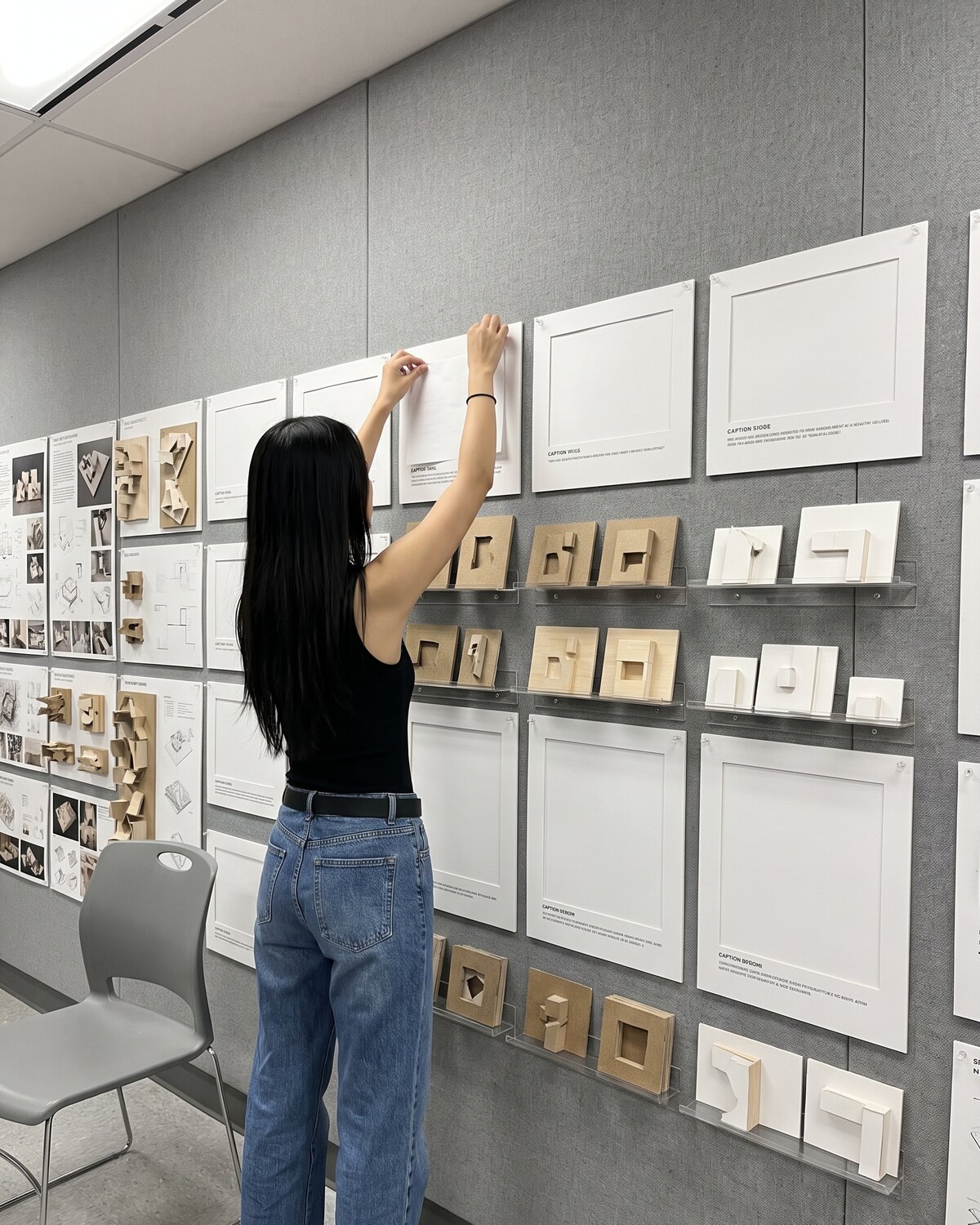
The execution layer. Priced per school, because the work genuinely scales with the list.
If you are applying on an F-1 visa: from 15 September 2026 the rules tighten. The first year has to be completed at the school that issued the I-20, and graduate students cannot change educational objective at all. Choosing the wrong programme stopped being a wasted semester and became a visa problem. Domestic applicants can transfer more freely, but the list still gets built before anything is written — the essays cannot be written until it exists.
School list planning
Faculty, facilities, and recent graduate output mapped against your direction. I read theses, not rankings. I also check where each programme actually sits — an interaction course housed in an engineering school teaches differently, funds differently and hires differently from one housed in an art school, and the transcript says so. For applicants on an F-1 visa that placement matters twice over: a STEM-designated degree carries a 24-month OPT extension on top of the standard 12, which is three years of US work authorisation instead of one.
Essays, per school
Written against the work rather than about it, then rewritten per program. A RISD submission and a Parsons submission are not the same document. Priced per school, with set rates at three, five and eight.
Application submission guidance
Requirements checked per school, portal quirks handled, deadlines held.
Interview coaching
Mock interviews with the questions faculty actually ask, and rehearsal for talking about your work while people look at it.
MFA, MA and MS applications are a different problem.
Ten of the eleven offers on the record are postgraduate. This is the work I do most.
What each package contains.
All packages are one to one. Scope is fixed in a signed agreement before any work begins.
swap — the AI project workshop is not included in any package. In any tier it can be taken in place of one portfolio project, on payment of the difference between the two ($550). It is never compulsory, and never added to a package you did not ask for it in.
Before you enquire.
Are sessions ever in a group?
No. Every service listed above is one to one, including the AI project workshop.
Can I buy a single service on its own?
Yes, and the price of each one is published above. A package is worth taking when you need most of the list; if you need two or three things, buying them separately costs less and I will tell you so rather than sell you a tier you do not need.
Will you make work for me?
No. Every piece in your portfolio is yours, made by you. I direct and edit, the critique is run by instructors trained at Parsons and NYU, and neither of us puts a mark on your work. The same applies to essays: I develop them with you and do not write them for you. Anything else would be both dishonest and easy for a committee to detect.
Can you work with a student outside New York?
Yes. Most students work online, with sessions scheduled around their timezone. In-person studio time in New York is available for those who can reach it, and the US studio placement requires it.
What is not included?
Visa, financial aid, and standardised testing are not services I offer. I will tell you where to get them.
I have eight weeks until the deadline. Is that enough?
Sometimes. Book a consultation and I will tell you honestly whether a compressed engagement is realistic or whether deferring a cycle is the better decision.